
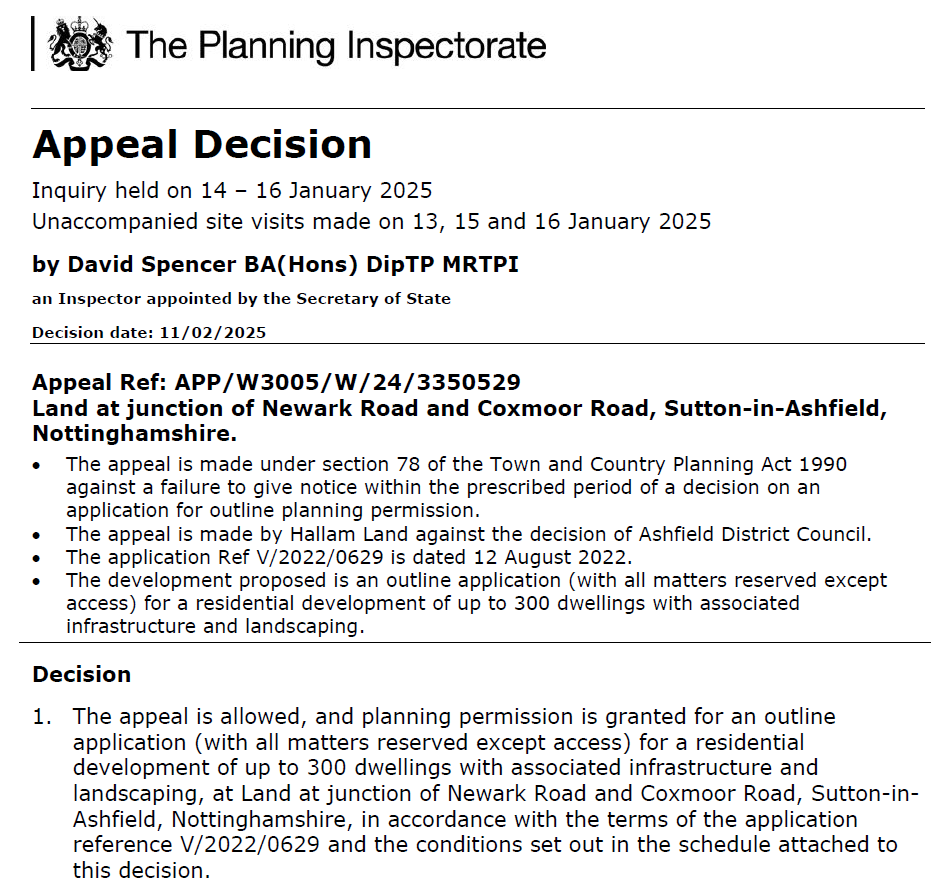
Of course it is pleasing to win a battle, especially one so hard fought. However, I am conscious of Kipling’s If, and the need to treat imposters the same. If you don’t also lose a battle, perhaps you are not challenging yourself enough.
My takeaway is the clarity and wisdom of the Inspector’s reports. Notably paragraphs 16 to 18 of the Cost Decision where he summarises the planning system. I have stored his words in my notebook and will be paraphrasing them in the future.
- It is understandable that Councillors and Committees want to be assured that developments are going to be safe and avoid unacceptable harms. It is also recognised that Councillors represent local communities and have a democratic mandate. However, the planning system must operate in the wider public interest, balancing competing objectives and ensuring that there would be no unacceptable risk to human health and the environment. The planning system, including the NPPF, reflects this and requires applicants to provide sufficient evidence to demonstrate that the proposal, on balance, would be acceptable, particularly on technical matters such as contamination and highways. It is also important that decision makers understand what they are determining (here an outline application with all matters reserved except access) and what would be a reasonable and proportionate level of evidence. What was apparent in the accompanying appeal is that ordinary thresholds of being put at unacceptable risk had shifted towards almost a demonstration of zero risk.
- The evidence provided by applicants to accompany the planning application was prepared by qualified persons, as required. It was assessed by persons who were professionally qualified and/or experienced in the particular field and relevant knowledge of the appeal location. Those assessing the appellant’s evidence are either officers of the Council or public bodies. Often, there is a good degree of risk aversion with these consultees, exemplified, as in this appeal, by the extensive degree of engagement, refinement and clarification in the multiple responses received during the course of the application. Consequently, if those technical consultees raised no objections and were satisfied that planning matters could be appropriately dealt with by condition or planning obligation, that should have been given very substantial weight. It is not good enough to arbitrarily seek additional (largely unspecified) evidence and so further delay decision making, creating significant and unwarranted uncertainty.
- Whilst I accept Members are not beholden to accepting the advice of their officers and technical consultees, there must be legitimate and clear reasons for doing so, including when deferring from making a timely decision. Those reasons could be drawn from factors such as competing technical evidence (i.e. a technical report commissioned by an objector) or where a planning officer, taking the bigger picture, has nonetheless recommended approval contrary to the advice of a technical consultee. None of that was in play here. The officer recommendation to grant planning permission, when correctly applying the tilted balance, followed a clear and logic audit trail through the various issues and evidence.